Design History and Method
Part 2
by Federico Galluzzi
Speaking of furnishing accessories, furniture and lamps in our magazines, we have always given space and visibility to the usual suspects, i.e. the manufacturing companies and those who design them.
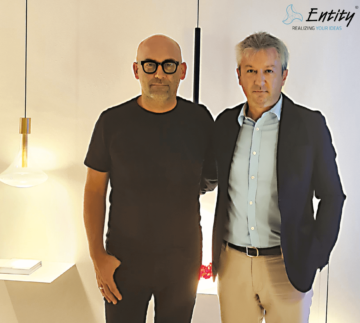
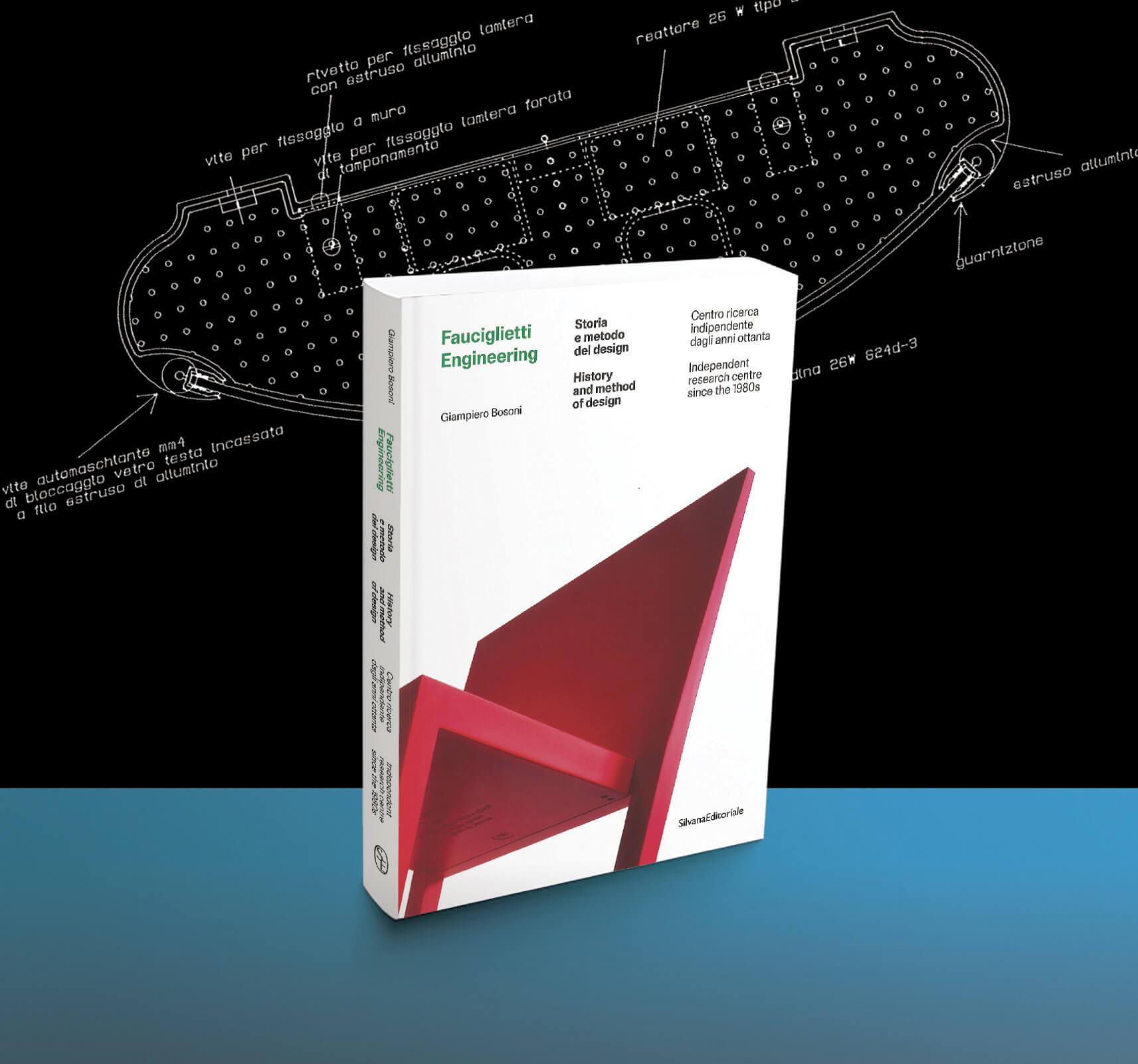
This Special Issue was born from a meeting with Graziella and Renzo Fauciglietti, owners of Fauciglietti Engineering in Cantù, and from reading the book Fauciglietti Engineering – Storia e metodo del design, written by Giampiero Bosoni and published by Silvana Editoriale, which I treasure on my desk. This book explores and analyses in detail, starting in 1989, nearly 40 years of engineering projects. Renzo, the president, explained to me how the success of any product or company, especially on international markets, depends on quality design, founded on careful planning and rigorous development. He, therefore, emphasized the fundamental role that product engineering plays in the quality of his project.
This Engineering Special Issue aims to provide a brief summary of the main published projects, to reveal this fundamental aspect of design. It is an aspect that is often overlooked when describing how a product – be it a piece of furniture, a furnishing accessory, or a lamp – is conceived, designed, and finally conceived and produced.
Fauciglietti Engineering, Design History and Method
Fauciglietti Engineering has operated in different design sectors, always aiming at being one step ahead, and having in its DNA an overall vision of the different issues that a new product must face before successfully entering the market. Thanks to a holistic vision in design products and development, he has been able to collaborate with many established Italian and international design studios to discuss ideas, concepts, design methodologies and approaches to problems, as well as the results analysis. That exchange has made it possible to broaden horizons and enrich skills. The expectation is that, in the future, the Fauciglietti Engineering experience and lead can be an inspirational source for the new generations, academics, entrepreneurs and the wider public.
Design: Giambattista Bellagamba, Renzo Fauciglietti
Manufacturer: Bellagamba, 1986
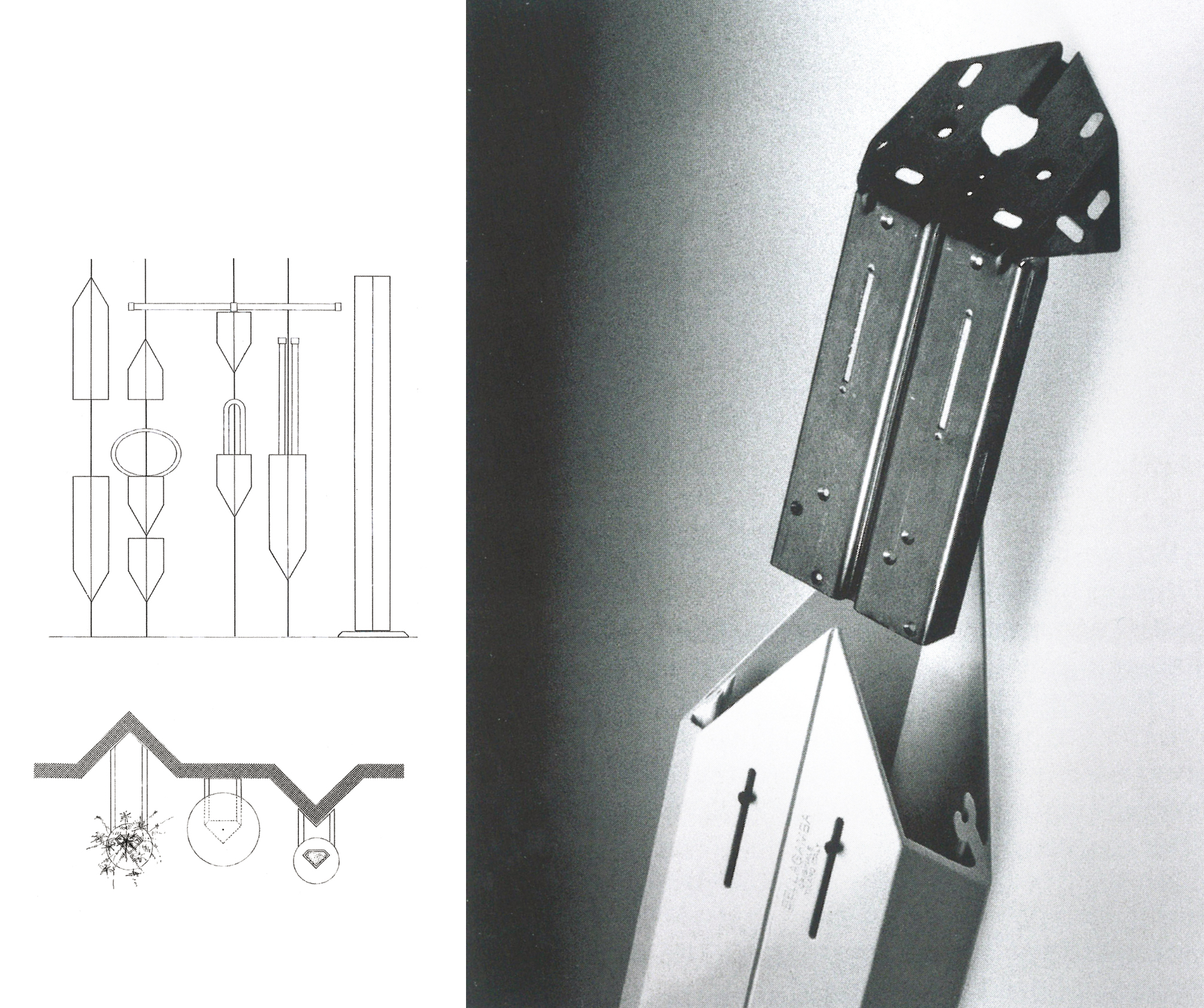
One of Studio OK's first projects, which aimed to develop a business based on product research and engineering, was collaborating on the design of the Pentax lighting system for Giambattista Bellagamba.
I had known Giambattista Bellagamba for many years, he was the general manager of a Pasini shop in Corso Monforte, in Milan, that later became a Skipper stare. We shared a mutual respect that developed into friendship. Around the same time that Graziella and I opened Studio OK, Giambattista decided to kick off his business project with the Pentax lighting system; naturally, he thought of entrusting us with the product development. lt was all about applying our insights to an entrepreneurial project.
Exactly. We accepted with great enthusiasm precisely because we knew that we would not just deal with the design, but also select the manufacturers, coordinating them and managing the various production stages. When Studio Ok was founded, we knew the time was right far the services we wanted to offer, and Bellagamba fully fit those small businesses eager to grow that depended on specialised consultancies to develop.
We worked on different projects and different types of products. The first project concerned a collection of directional desks that, thanks to an increase in size could be used as conference tables, and matching office furniture. The challenge in that instance was finding a good cabinetmaker, capable of managing the production of pieces with complicated shapes. After various searches, we collaborated with Riva 1920; they created the samples to be displayed in the Bellagamba showroom in Via Visconti di Modrone in Milan, which garnered a positive response from the public.
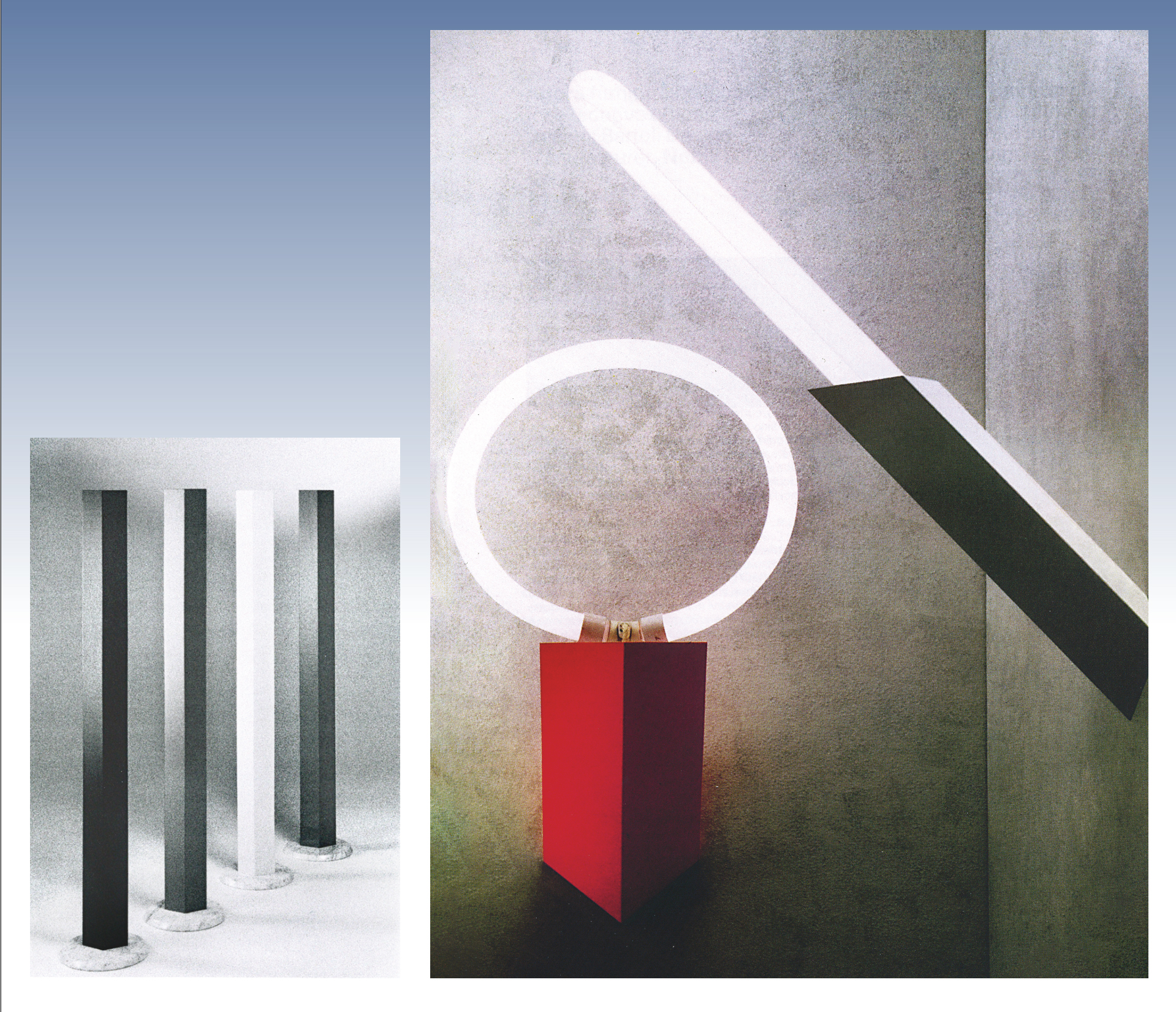
Actually, we worked on a lighting system for the first time: a family of lamps later called Pentax, based essentially on the use of a pentagonal aluminium extrusion. The object's geometrical configuration guaranteed its structural integrity. A feature that allowed us to elaborate a floor model with a marble base that reached up to two metres in height and provided excellent ambient lighting. The extruded aluminium with that section also provided other significant advantages; for instance, it allowed us to allocate different light fittings inside, such as halogen, Edison E47 or fluorescent. Alternatively, the light could be replaced with a vase. Different variations could be achieved with just three different cuts to the base, which allowed the installation on corner walls and edges.
We managed everything, from the engineering to producing the moulds and later even the IMQ and UL checks and testing stages to allow their distribution on all international markets. Over time, this formula became a permanent practice for us: taking care of all the product's stages including the final testing phase.