Design History and Method
by Federico Galluzzi
Speaking of furnishing accessories, furniture and lamps in our magazines, we have always given space and visibility to the usual suspects, i.e. the manufacturing companies and those who design them.
In this regard, last September at MUDEC Milan, during the award ceremony of a well-known competition aimed at young design students and established professionals, I had a pleasant chat with Graziella and Renzo Fauciglietti, owners of Fauciglietti Engineering, seated in Cantù, Italy. The president, Renzo, explained to me how the success of any product or company – especially in international markets – goes through quality design, based on careful planning and laborious development. He exalted the fundamental role that product engineering plays in his projects. That is the work carried out by Fauciglietti Engineering, an activity that records over 1000 projects, consultancy, research and products developed for relevant names of the Italian design.
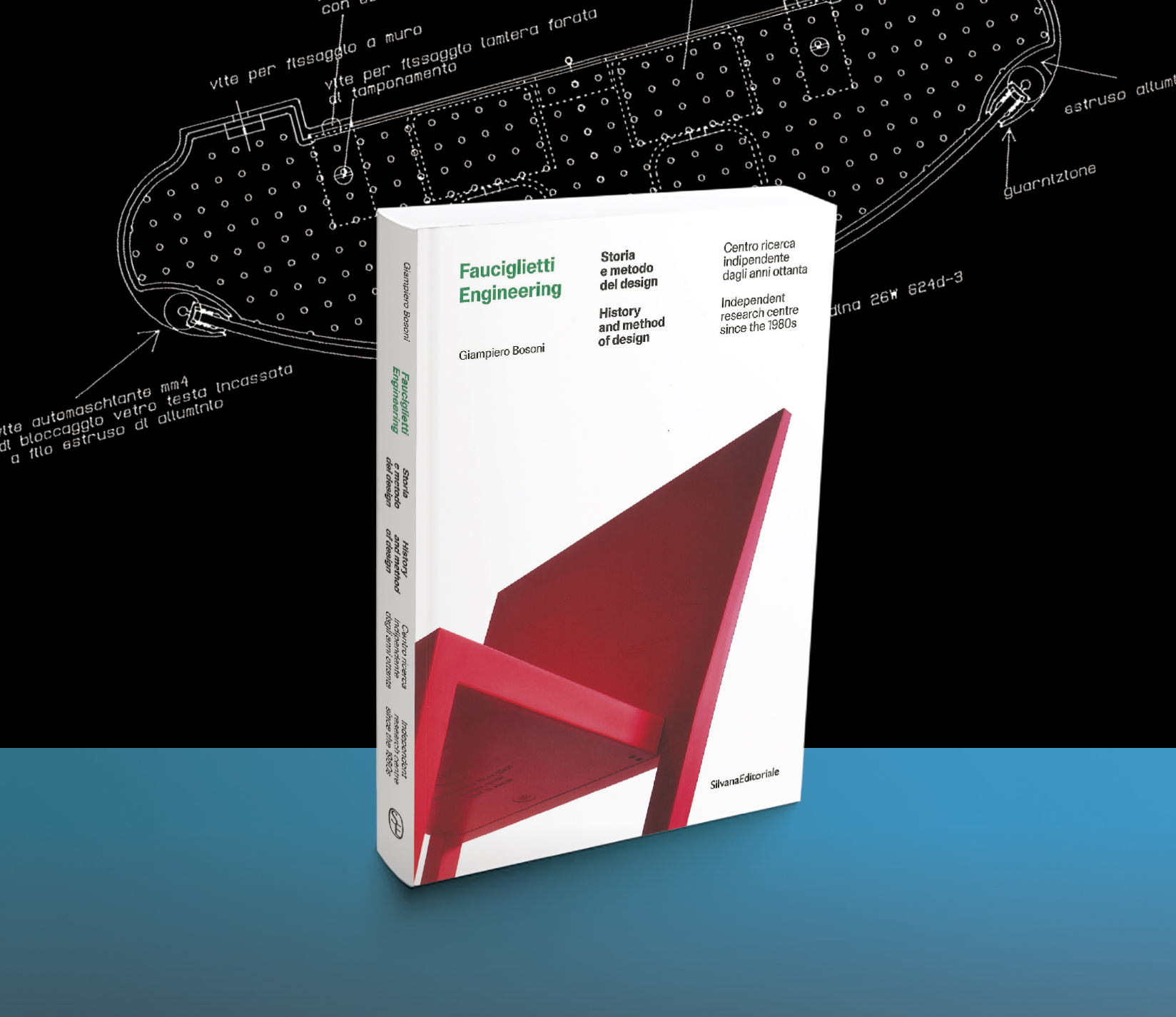
After that meeting and after reading the book Fauciglietti Engineering – Design History and Method, written by Giampiero Bosoni and published by Silvana Editoriale, which I jealously keep on my desk, this Special was born. The book goes through and analyses in detail, starting from 1989, almost 40 years of engineering projects. Thus, this Engineering Special aims to be a brief summary of the main published projects, to reveal this essential design step. An aspect that is often overlooked in telling how the product, be it a piece of furniture or a lamp, was conceived, designed, perceived and finally produced.
In March 1986, after Renzo Fauciglietti left his managerial position at Skipper, the new business, under the name of Studio OK, immediately understood that in the Brianza district and in several leading companies throughout Italy and Europe, the time was ripe to produce and market high-quality furniture and design objects. However, many of these small companies were not organizationally or culturally ready to achieve accurate product and process innovation. Thus, the Studio aimed to offer its support to these realities by creating qualified services purpose-suited for that, helping them to grow and become significant design-product industries. In 1989, after three years of positive tests with some Lombard companies, Fauciglietti Engineering was established.
Over time, the company was adequately structured, and it became the first independent Italian research centre in the furniture field. The first well thought-out intuition at Fauciglietti was to invent a working methodology that allows for proceeding with safety, creativity and rationality in carrying out the various tasks assumed by customers, through a flexible and suitable method for the concept, design, engineering and development of quality design objects. In all these years, Fauciglietti Engineering has operated in different design sectors, always aiming at being one step ahead, and having in its DNA an overall vision of the different issues that a new product must face before successfully entering the market.
Thanks to a holistic vision in design products and development, he has been able to collaborate with many established Italian and international design studios to discuss ideas, concepts, design methodologies and approaches to problems, as well as the results analysis. That exchange has made it possible to broaden horizons and enrich skills. The expectation is that, in the future, the Fauciglietti Engineering experience and lead can be an inspirational source for the new generations, academics, entrepreneurs and the wider public.
Design, engineering, development: Graziella and Renzo Fauciglietti
Production: Marino Cristal 2001
Thinking back to the collaboration with Marino Cristàl, Renzo Fauciglietti offers a piece of advice to young designers: he invites them to evaluate the complexity of the work in all its aspects, seeing it as an opportunity to fully understand the dynamics of the project.
How did the relationship with Marino Cristal, one of the lighting companies with which you collaborated, come about?
We met Marco Galassi on a visit to their headquarters in San Marino and he entrusted us with the design and development of some lamp collections: the design, engineering and development would have to be managed entirely at our headquarters in Cantù, also selecting all suppliers. The company had a predominantly commercial approach, it did not deal with production directly, it was mainly based on the import of Bohemian crystal artifacts. However, it had excellent premises with respect to placing itself on the market, as it had already made contacts with specialized representatives and participated in the main trade fairs in the sector.
Yours was a very broad consultancy therefore, in which the project was part of a broader desire on the part of the company. Thinking back to this design path, what advice would you give to young designers wishing to undertake a consultancy path?
First of all, it is necessary to be aware that the work will be challenging, because it is necessary to deal with many different aspects, deriving from the multidisciplinary nature of the phases necessary for the completion of the project and its production. In addition, you must be aware that part of the commercial success of a product is contained in the project itself. Following production, the relationship with suppliers, however complex, is highly formative because you understand the complexity of production, the importance of investments and the costs of industrializing a product.
How many products were born from this collaboration?
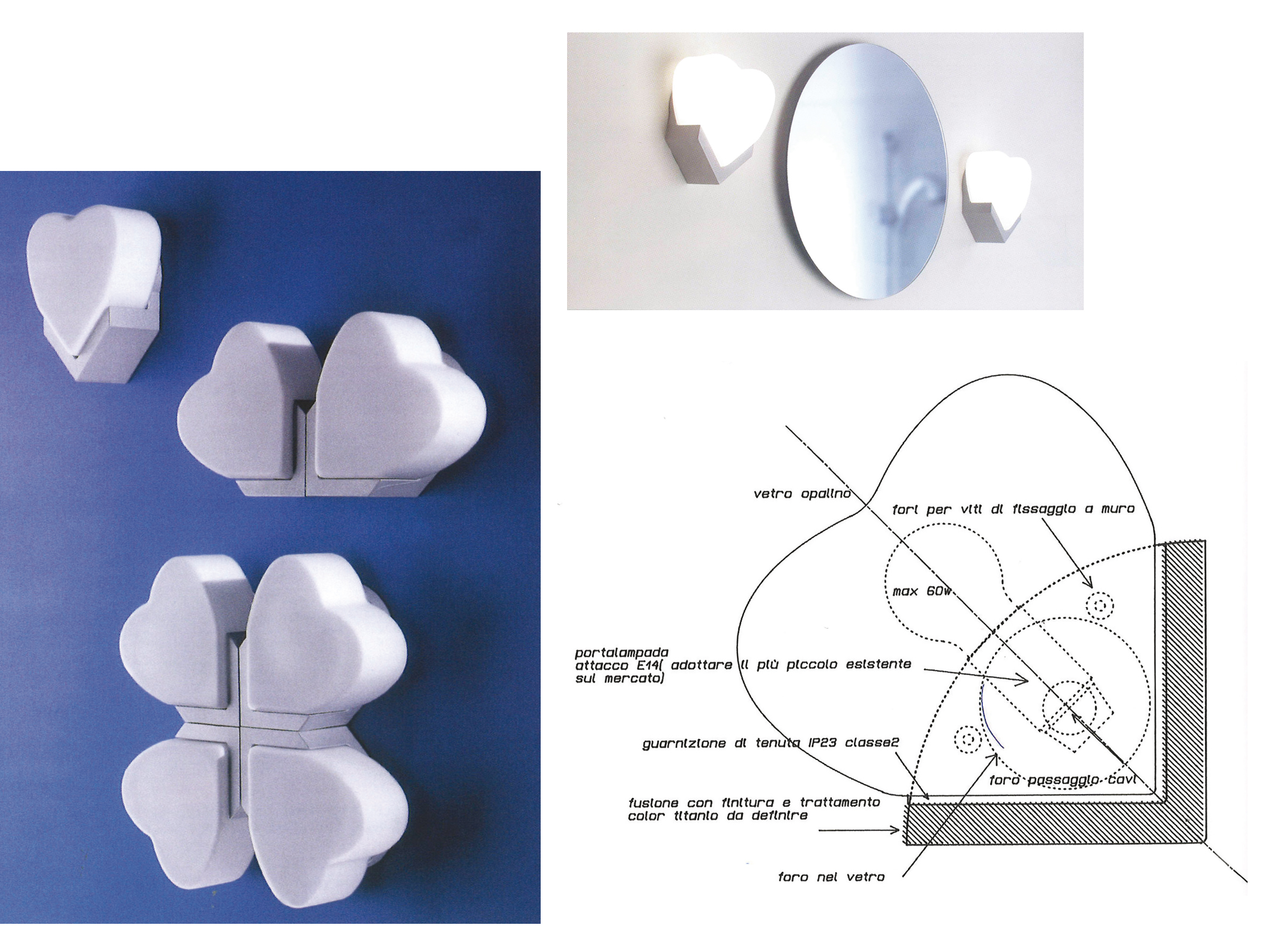
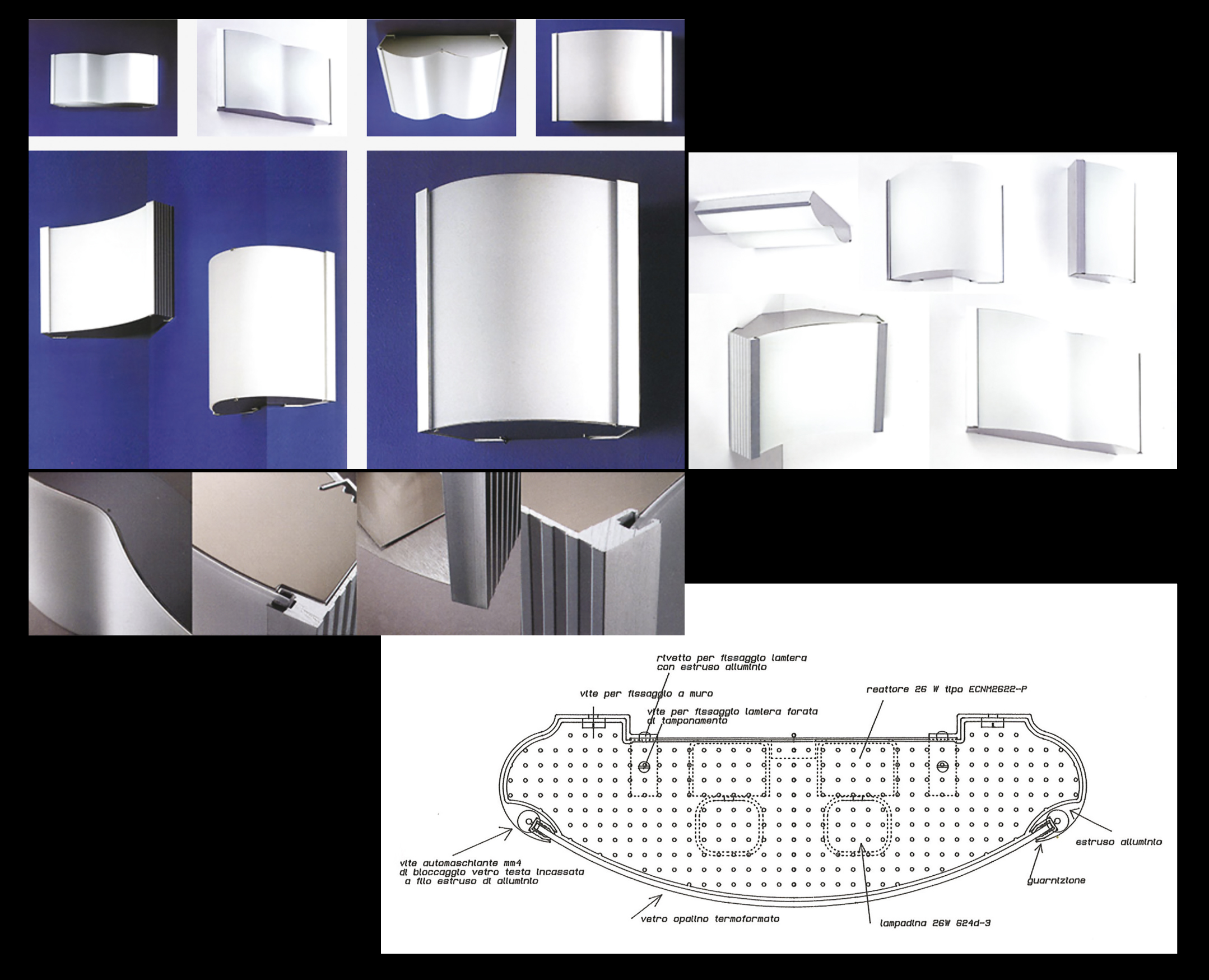
Two collections of Cuore and Onda products, which went into production in 2002, after about a year of development and after the IMQ certification phases. Both products had a certain complexity as they involved the use of different technologies such as Murano blown glass for the Cuore collection and thermoformed glass for the Onda collection; moreover, matrices suitable for the extrusion of aluminum profiles were made.By virtue of these technical characteristics, it was important to make a very careful selection of suppliers, who had to be specialized in their sector and have experience in the field of decorative lamps.