An example of hospitality designed according to sustainable principles
A sustainable development model is one that is able to ensure that the needs of the present generation are met without compromising the ability of future generations to achieve their own. Starting from this definition, the MODE project was born in Rimini, which involves 13 of the most significant architectural firms in the hotel industry, called upon to give their interpretation of sustainable design. The MODE project takes the form of an accommodation space that can be a point of reference for the hospitality sector based on the redevelopment of old historic structures of the Rimini tourism industry. Known mainly as a sun & beach destination, Rimini is positioned on the market both for its leisure sea and hinterland tourist offer, but also for business, for events and exhibitions of international appeal. Rimini is an iconic destination and city that aims to evolve itself.
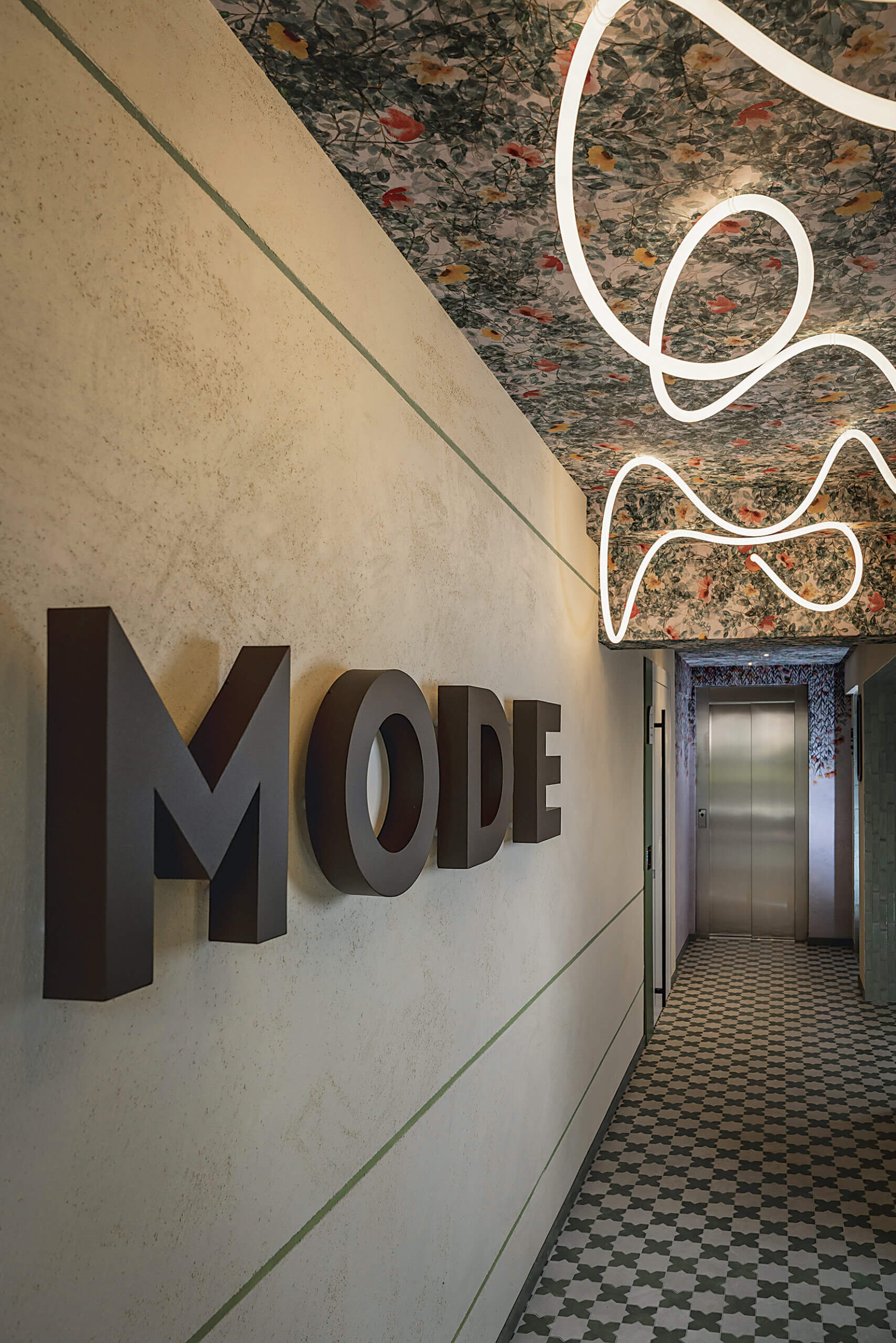
MODE HOTEL was born from the redevelopment of the former Hotel Arlesiana in Rimini, in the San Giuliano Mare area near the port, a short distance from the main points of attraction, both business and leisure. The structure of MODE HOTEL is a permanent showroom: each room is an experience that represents the personal vision of eco-sustainable hospitality of each designer. MODE HOTEL goes beyond the classic schemes of hotel definition, with a vision of doing things differently.
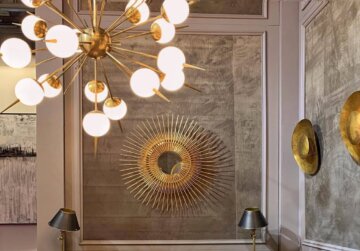
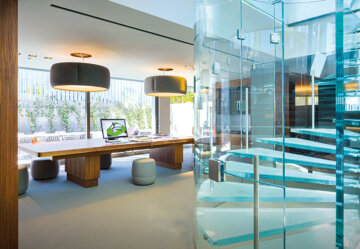
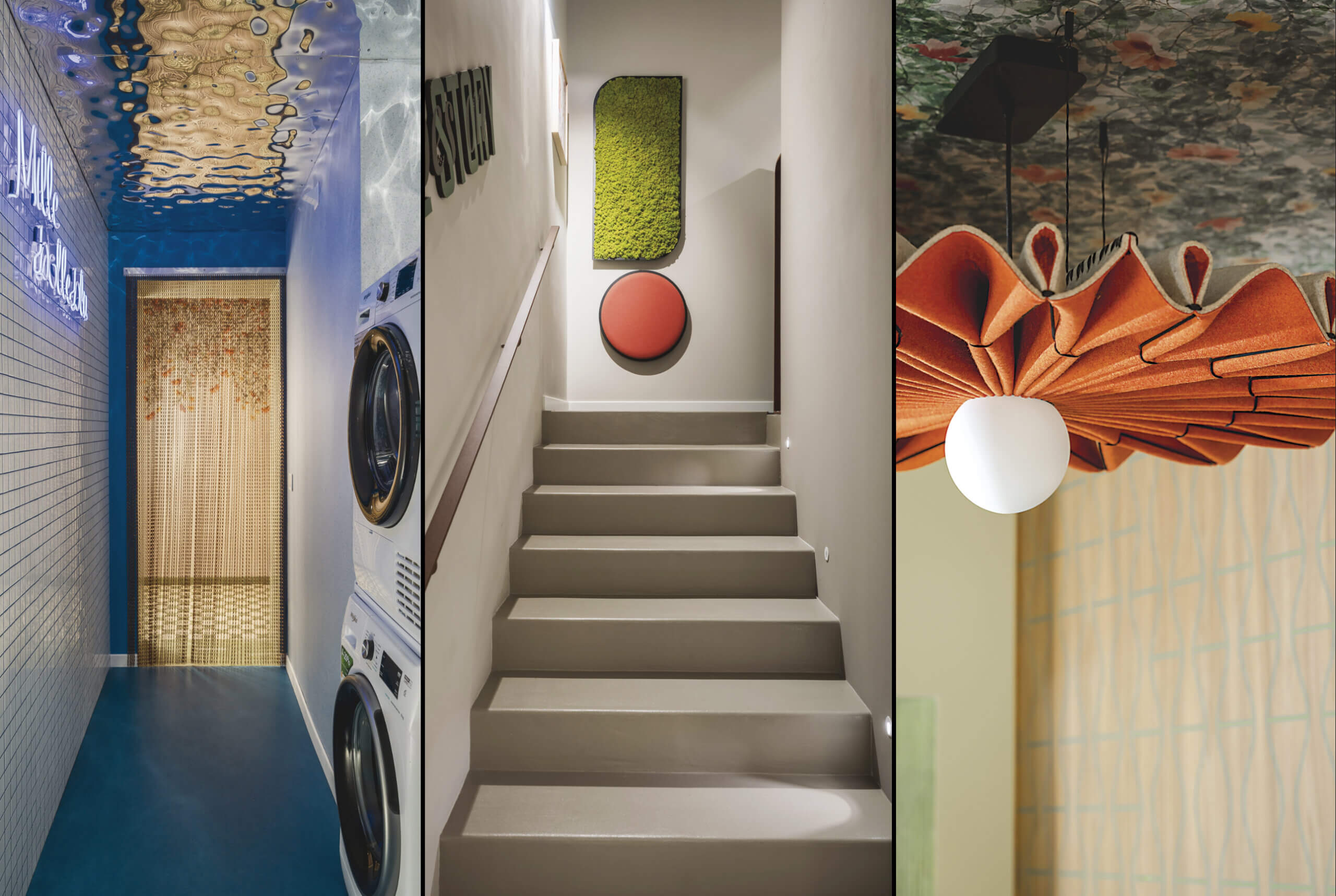
The distribution layout of the MODE project includes nine suites, a co-working area, a hall, and services on the ground floor. Each area has its own identity and recalls the design values of the theme.
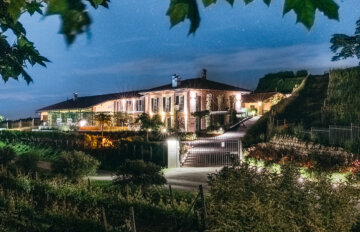
The exteriors of the hotel, with the emblematic title Green is the new black, were designed by Rizoma Architetture, and focused on the creation of a building envelope that would be performing from the point of view of energy saving, with energy production from renewable sources, capable of protecting from atmospheric agents.
The lighting design of “Green is the new black”, the garden and the Garden Suite was designed by Chiara Tabellini of Comfort Hub. The project has been developed in full compliance with the recommendations of the reference sector, thus ensuring compliance with all safety, energy efficiency and light quality requirements. The design research has paid particular attention to the aesthetic integration of the lighting elements with the architectural concept, selecting solutions that enhance the spaces and enhance their characteristics, without compromising functionality. Particular importance has been paid to the management and maintenance of the plant, choosing equipment and technologies that facilitate rapid interventions and reduce operating costs over time. The project pays particular attention to the principles of environmental sustainability, adopting solutions with low energy consumption, reducing light pollution and using materials and technologies that contribute to a lower overall environmental impact. The combination of regulatory compliance, aesthetic consistency, management efficiency and environmental sustainability guarantees a cutting-edge lighting project, capable of enhancing spaces and respecting the environment.
MODE HOTEL creates a concept, an example of knowing how to rethink the ‘Romagna pension’ model and join in a process of redevelopment of the city, framing it in the modern concept of tourism of responsible hospitality. Freshness and passion in sharing an approach of hospitality: the structure towards people, people towards the world. You no longer live as a local but among the locals. A place open to everyone where you can live as you want, at your own pace.
CREDITS
Project Management | Hospitality Project
Marketing Consulting |Teamwork Hospitality
Architectural Coordination & Art Direction | Laura Verdi
Corporate identity | Santacroce DDC
Ph. Credits | Flavio Ricci
THE TECHNICIANS
Plants | Studio Cavazzoni Associati
Authorisations and construction management | Studio ASP – Loris Rinaldi
Project and site coordination | Hospitality Project
LEED AP BD+C | Engineer Stefano Ferri