Light Studio, since 1971
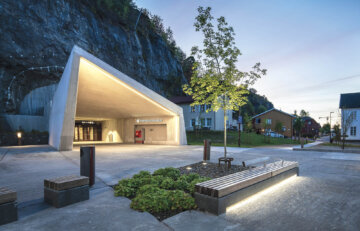
Light Studio is renowned for its Works of Art lighting, in public and private environments. It has conceived, designed, used and successfully applied innovative techniques based on the exploitation of luminous flux, such as manually chiselled light and reflected or multi-reflected and directional light. The studio has dedicated – and still pays particular attention – to the lighting and conservation needs of works of art, as well as to aesthetic and compositional factors, to propose design and technical solutions, intended for the specific peculiarities of the place and the object.
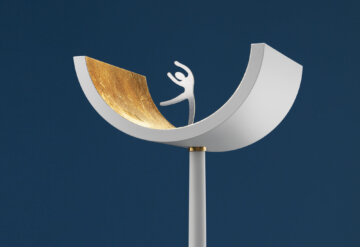
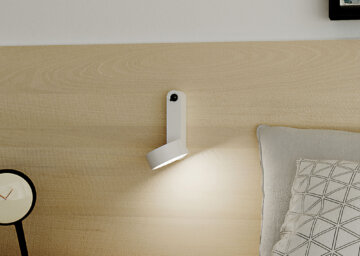
In 1994, “ANNILUCE by Light Studio” was born. A line of lighting fixtures that still enjoys the attention to “clean” thoughts not contaminated by market trends. The research and development laboratory creates products in step with technological evolution.
Light Studio thinks that an “object”, be it a painting, a sculpture, a corner of a home or an exhibition space, should not only be “illuminated”. The object must be able to express its “vitality or drama” through light. Beyond the techniques and tools to be used and usable, their first and last thought aims at the overall perception and the visual and emotional consequences of both natural and artificial photonic composition.
Design – Consulting – Light Design / Lighting Design
Lighting of works of art and light-sensitive materials
Stage lighting technology
Custom production
Laboratory: Research and exploitation of luminous flux
Lighting Department for exhibitions, museums, showcase areas
Lighting Department for public and private interiors and exteriors.
In the footsteps of Luciano Laurana and Francesco di Giorgio Martini, protagonists of that aesthetic and functional architectural design for the “city in the form of a palace” – as Baldassarre Castiglione defined it in his essay Il Cortegiano – the architectural and museography lighting redevelopment project of the prestigious residence of the Duke of Urbino, was developed to restore a luminous perception of the spaces, that was as consistent as possible with the Renaissance ideal of harmony between light and architecture. Natural light, a key element in the humanistic vision of living, has been taken as a primary reference: not as a simple light source but as a structural component of the most probable visual narrative of a place, ancient and contemporary. From here, the artificial lighting was designed in constant dialogue with the natural one, “harnessed” with discretion and measure to enhance the architecture, the ravines, the furnishings and each work of art exhibited in the different “chiaroscuro weight”, without this being able to overwhelm and alter the overall perception.
Respecting its history and the symbolic function of light, the goal was to evoke, throughout the year, the warm and amber brightness of the flame to the morning, afternoon, and twilight sun of Apollo and Dawn’s passage. Trying to recompose that light that once could have crossed “with force or calm” the courtyard of honour, the majestic staircase, the apartments, the gardens and the rooms of the Duke, changing the moods and loves of a time that we will call the Renaissance.
Two large windows radiate light from the Hall of Angels, so called because of the singular dancing putti portrayed in bas-relief on the front of the majestic fireplace, the work of Domenico Rosselli 1439-1498 – natural light invests the large and sumptuous space, sparsely highlighting the floor and walls, as well as the magnificent terminal corbels of the immense vault, finely carved in white, in blue and pure gold. So, where the sun, with its varying incidence, changes the perception of being in this place, artificial light highlights at the same time what nature cannot do.
With discretion, a measured and reduced number of lighting fixtures, accent lights different in shape, the indirect light on the vault induced by a specially designed LED system in terms of colour temperature, equal distribution of luminous flux and quantity evokes the perception of an average warm light, constantly “perceptible but not visible”. The large fireplace, the imposing and valuable chest, the wonderful inlaid doors, the amazing Corpus Domine Altarpiece by Giusto di Ghent and the entirety of the space are visible in a dimension that we could paradoxically and futuristically define as medieval.
Note: For the Pala del Corpus Domine by Giusto di Gent 1472-1474: (considering its obligatory position, the size and the particular reflectance of the pictorial surface), dedicated shapers and filters have been customized for the abatement of reflections to better visualize the entirety of the work, from all sides.
Luigi Gallo
Director of the Palazzo Ducale in Urbino
Regional Directorate of National Museums in the Marche region
Giovanni Russo
Official Art Historian
Francesco Primari
Official Architect
Iskra and Giuseppe Mestrangelo
Light designers – Light Studio Milano
COURTESY LIGHT STUDIO©