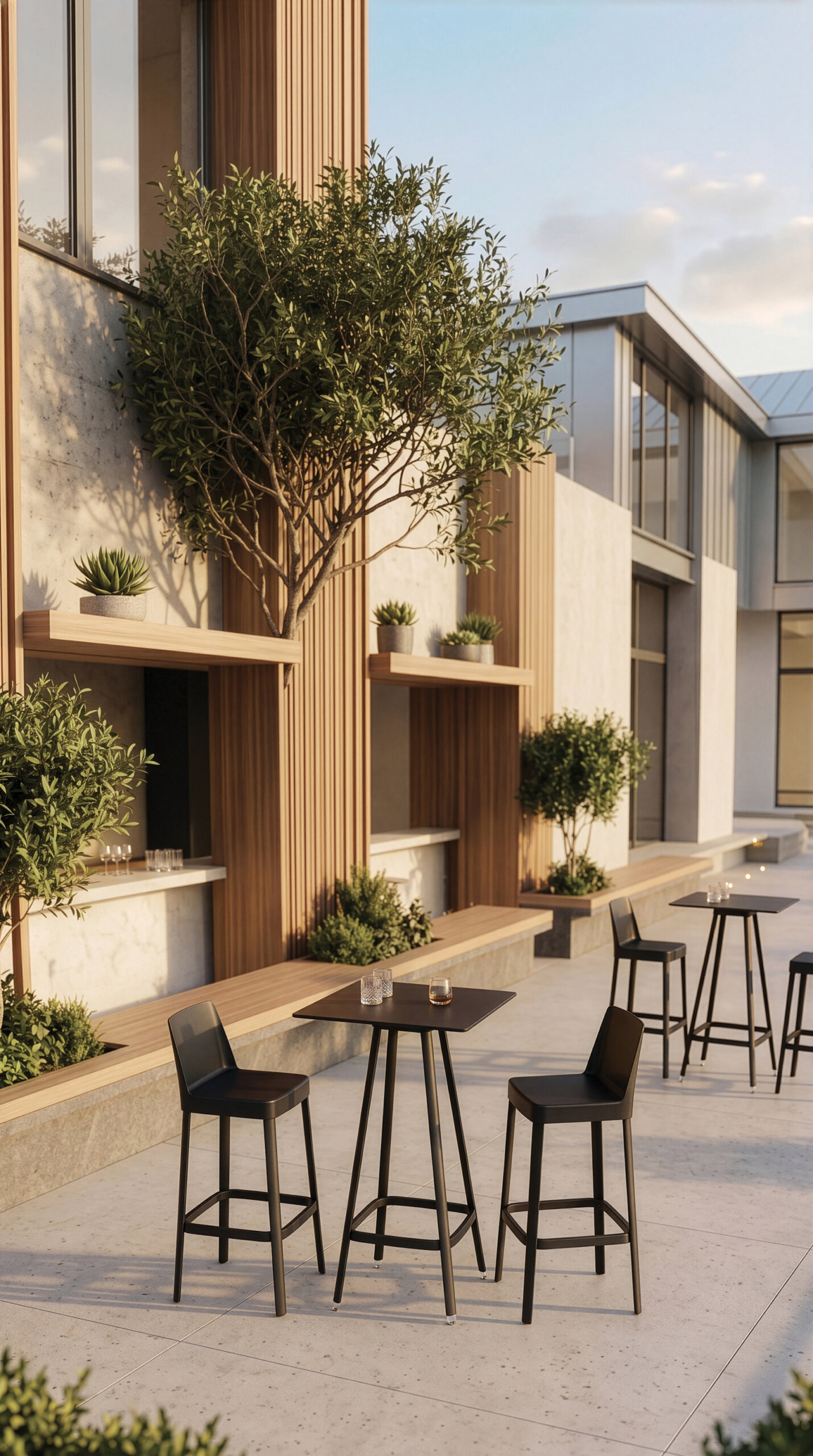
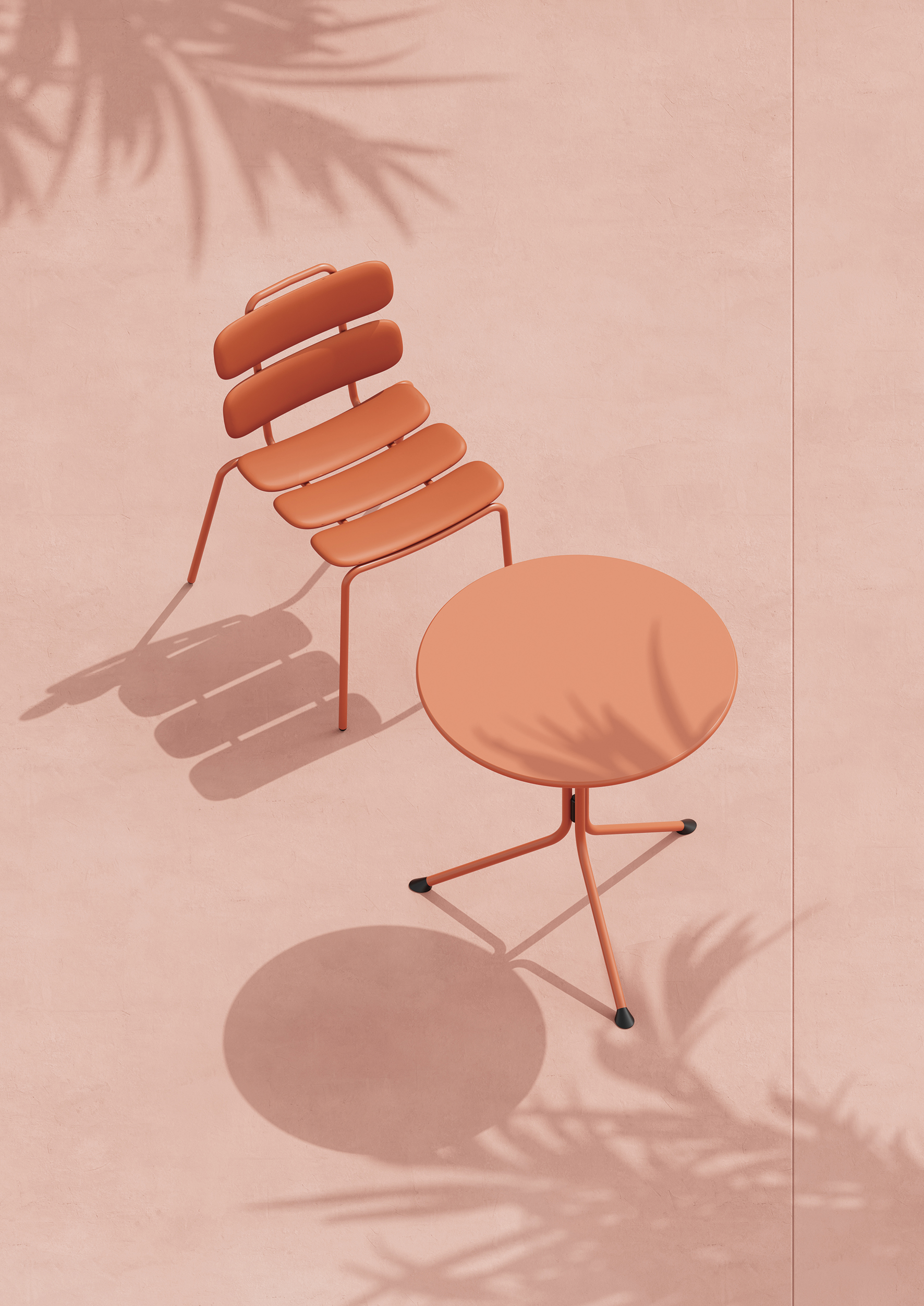
In contract environments, the table is no longer just a support surface. It is a place for meeting, working and sharing, an element that helps define the rhythm of spaces and organize their functions. From hospitality to restaurants, from workplaces to outdoor areas, usage patterns change, as do required heights, dimensions and configurations. For interior designers and dealers alike, it therefore becomes increasingly important to rely on versatile, coherent and easy-to-configure systems, capable of adapting to different contexts without losing aesthetic continuity.
It is in this direction that Alba’s proposals are developed: collections designed as project tools, offering multiple possibilities within a recognizable language. Riace, Lemon and Tapas interpret different needs through solutions that combine solidity, practicality, variety of formats and finishes.
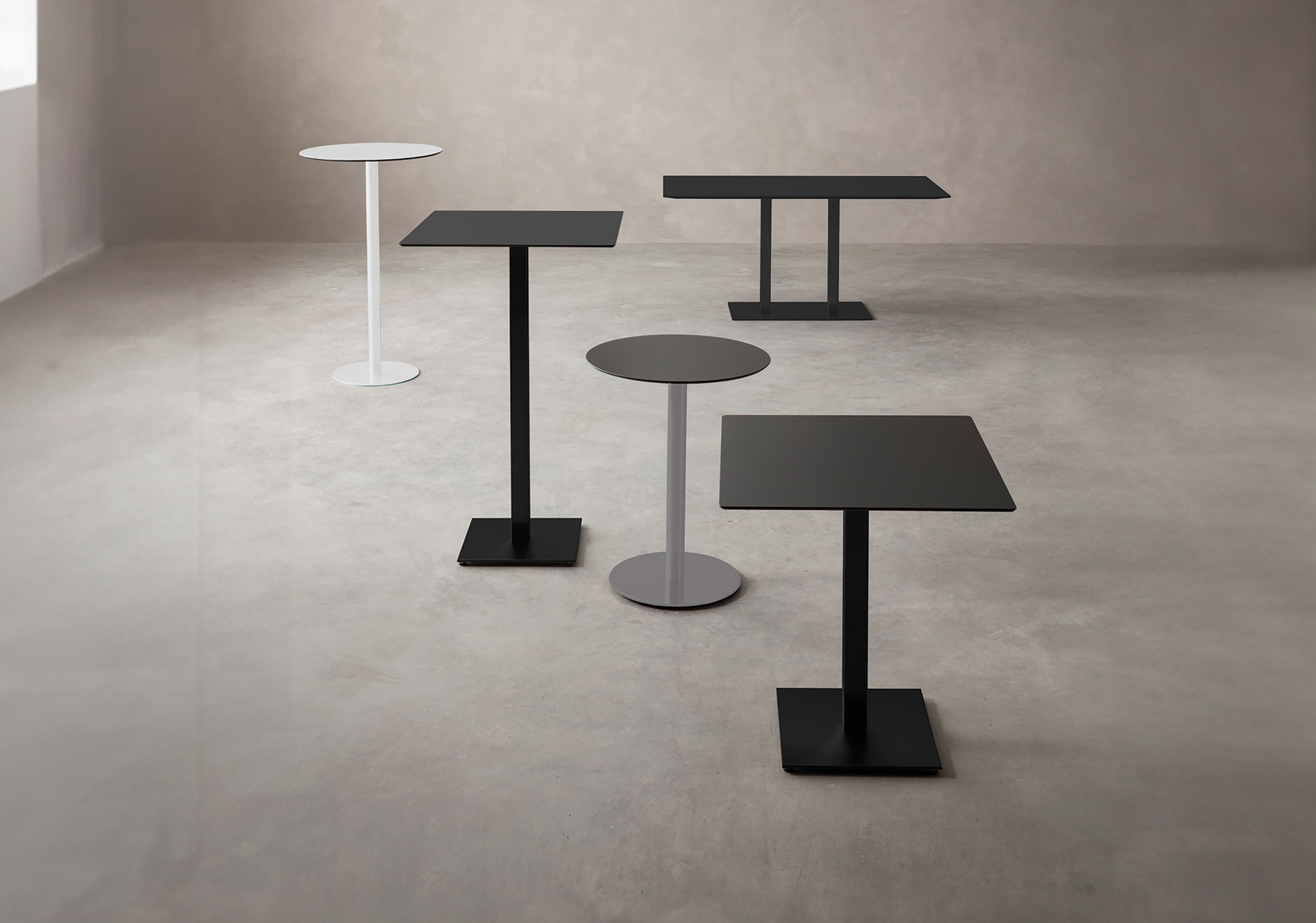
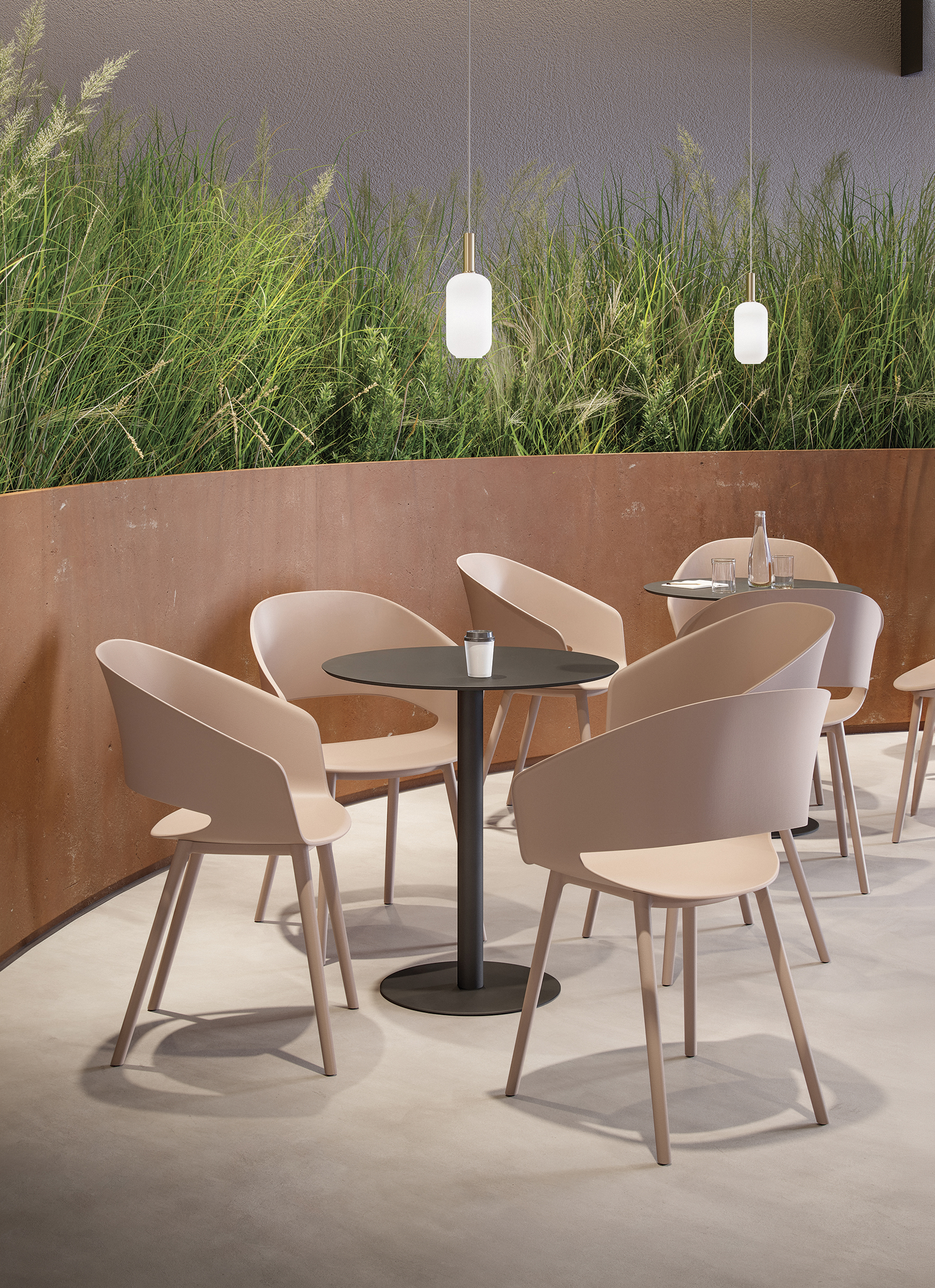
In hospitality and restaurant settings, the table accompanies different moments and durations of stay. A quick coffee, an informal break, lunch or dinner all require different proportions, heights and configurations, as well as reliable products suitable for intensive use and easy daily management. The possibility of choosing between round, square or rectangular tops, low, medium or high tables, and different base types allows for more flexible layouts.
Riace, with its central column base and single- or double-column configurations, addresses this need through an essential and neutral design, able to integrate naturally into different projects. Its clean lines and wide range of formats make it a transversal solution for restaurants, cafés, hospitality areas and indoor environments where simplicity and aesthetic continuity are key values.
Lemon introduces a more distinctive character. Designed by Pio and Tito Toso, the collection is defined by its three-leg structure, available in single or double base versions, and by a wide colour range that allows tables and seating to be coordinated within the same project. Metal tops, matching the structure, strengthen visual coherence, while the version with a flip-top system enables stacking and space optimization. A feature particularly useful in environments requiring operational flexibility.
The ability to adapt to different functions is also central in workspaces and co-working environments, which are becoming increasingly hybrid. Here, the table can serve as an individual workstation, a shared surface, a space for informal meetings or a support area. Balanced design, multiple heights and formats allow the same aesthetic language to be integrated across different functional zones, simplifying the project and supporting commercial proposals.
The continuity between indoor and outdoor spaces is another key theme. Dehors, terraces, courtyards and hybrid areas are natural extensions of interiors and require products capable of maintaining formal coherence, reliability and long-term durability. Lemon and Tapas respond to this need with solutions designed for outdoor use as well, enabling coordinated spaces and a consistent visual identity between inside and outside.
Tapas, designed by Edi and Paolo Ciani, is based on a practical approach. Its central base with four legs and footrest, combined with durability and easy assembly, makes it suitable for hospitality, bars, food courts and informal spaces, where space optimization and quick management are essential aspects. Here as well, the possibility of combining tables and coordinated seating expands design options and facilitates the creation of complete proposals.
Versatility, clarity of range and ease of configuration thus become advantages not only for designers, but also for those who propose and sell the product. Working with clear, structured and coordinated collections simplifies the dialogue with clients and enables consistent solutions for different environments.
With its table systems, Alba interprets contract not as a sum of individual pieces of furniture, but as a network of relationships between forms, functions and spaces. Different solutions, sharing the same goal: structuring contemporary environments with functional, durable products capable of adapting to real project needs.