
Design History and Method – Part 2
by Federico Galluzzi
Speaking of furnishing accessories, furniture and lamps in our magazines, we have always given space and visibility to the usual suspects, i.e. the manufacturing companies and those who design them.
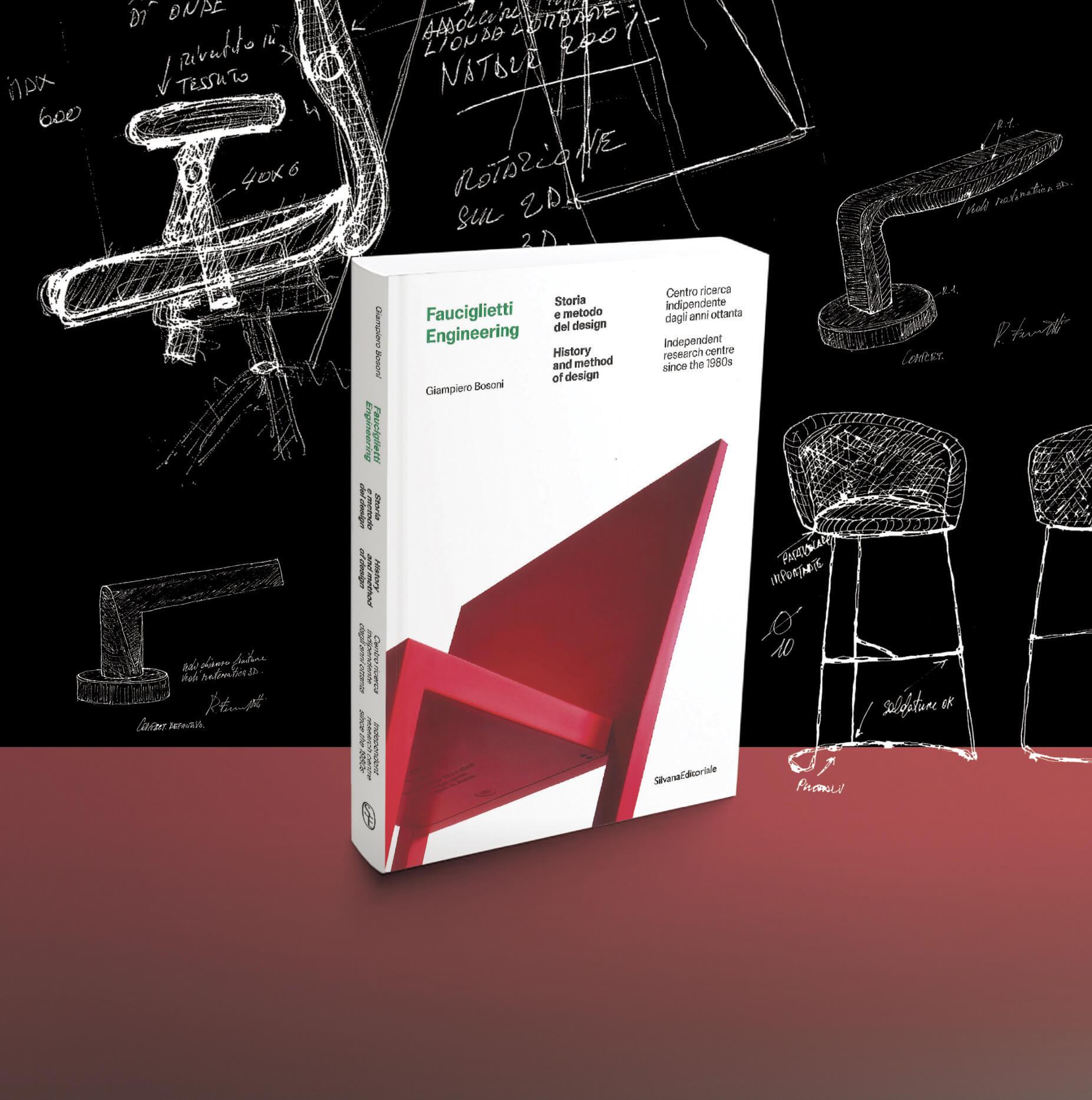
This Special Issue was born from a meeting with Graziella and Renzo Fauciglietti, owners of Fauciglietti Engineering in Cantù, and from reading the book Fauciglietti Engineering – Storia e metodo del design, written by Giampiero Bosoni and published by Silvana Editoriale, which I treasure on my desk. This book explores and analyses in detail, starting in 1989, nearly 40 years of engineering projects. Renzo, the president, explained to me how the success of any product or company, especially on international markets, depends on quality design, founded on careful planning and rigorous development. He, therefore, emphasised the fundamental role that product engineering plays in the quality of his project.
This Engineering Special Issue aims to provide a brief summary of the main published projects, to reveal this fundamental aspect of design. It is an aspect that is often overlooked when describing how a product – be it a piece of furniture, a furnishing accessory, or a lamp – is conceived, designed, and finally conceived and produced.
Fauciglietti Engineering has operated in different design sectors, always aiming at being one step ahead, and having in its DNA an overall vision of the different issues that a new product must face before successfully entering the market. Thanks to a holistic vision in design products and development, he has been able to collaborate with many established Italian and international design studios to discuss ideas, concepts, design methodologies and approaches to problems, as well as the results analysis. That exchange has made it possible to broaden horizons and enrich skills. The expectation is that, in the future, the Fauciglietti Engineering experience and lead can be an inspirational source for the new generations, academics, entrepreneurs and the wider public.
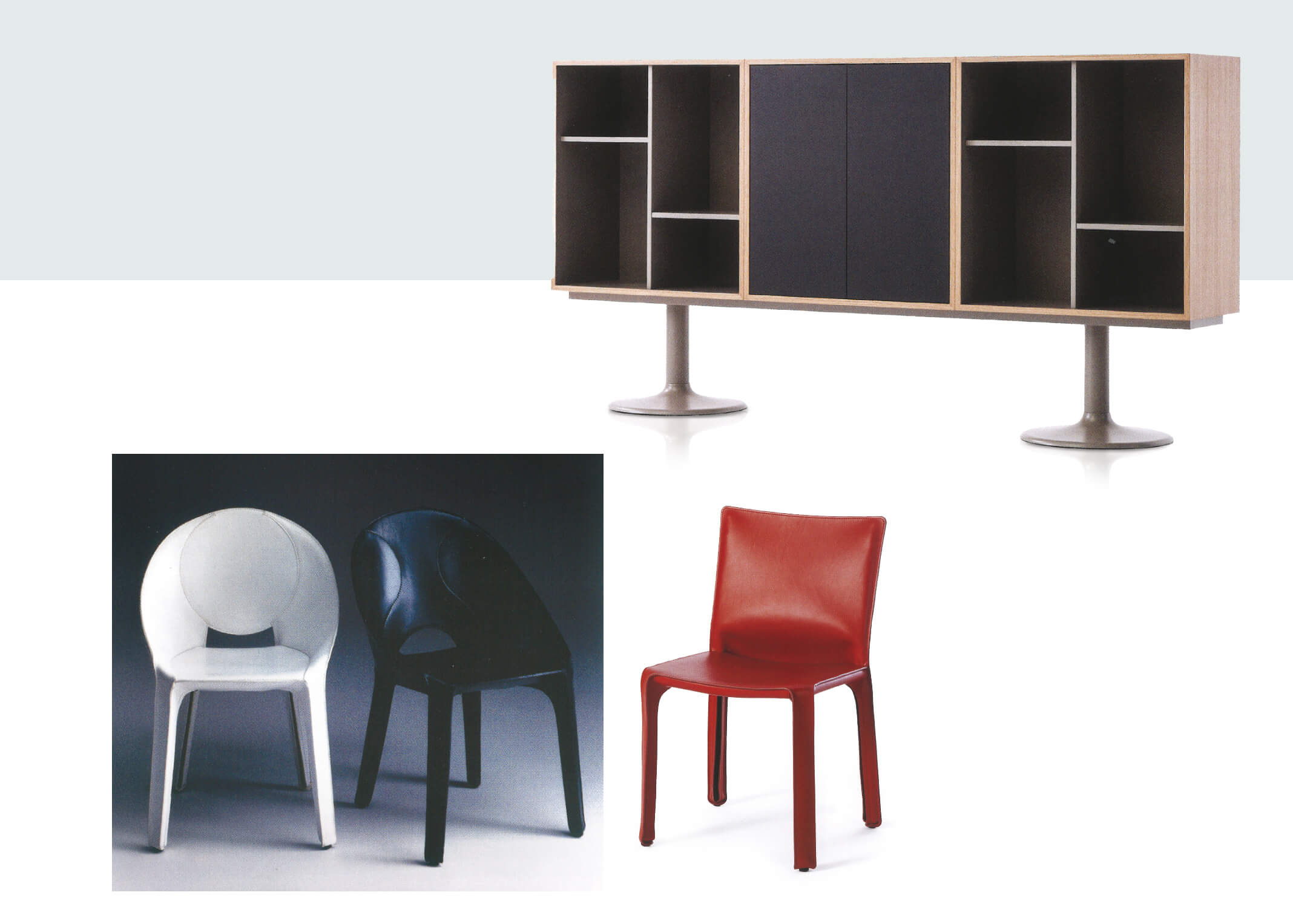
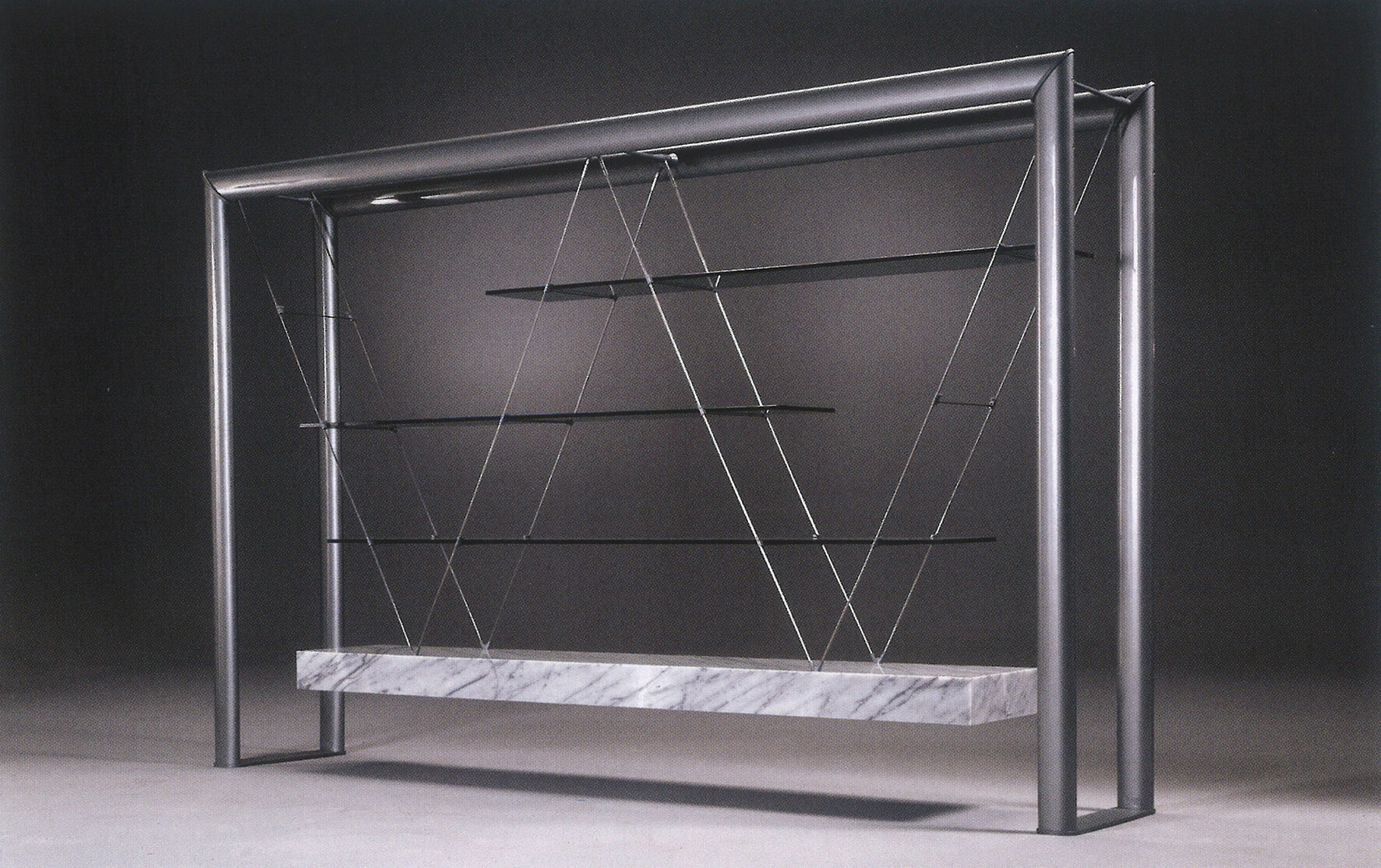
Between 1989 and 1992, the Cassina company developed some projects in collaboration with the studio Fauciglietti. These include Andrea Branzi’s Berione bookcase, the reissue of Le Corbusier’s Casiers Standard, and some manufacturing improvements to Mario Bellini’s Cab chair. These notable experiences, arising from fruitful relationships, have spurred Fauciglietti in researching new design approaches.
G.B.: Cassina’s Research and Development centre was a unique case in the context of Italian design because, unlike industrial contexts like FIAT or Olivetti, it was rare for a design retailer to create this kind of office. How come Cassina decided to invite you, given that it had this resource?
F.: Actually, at first, Cassina did not call us; it was we offering our services. Our admiration for the company and the desire to measure ourselves against such a prestigious client led us to seek out opportunities for meetings. It was not easy, but we succeeded by contacting the CEO at the time, Rodrigo Rodriguez, who pointed us to engineer Cattaneo, head of research, development and production. I still have a lot of memories of engineer Cattaneo tor whom I nurture esteem and gratitude.
G.B.: What persuaded Cattaneo to employ an external consultant despite managing the research centre?
F.: From the first meeting, Cattaneo was impressed by my experience at Skipper, revealing that Cassina had purchased some Skipper products to analyse them because they were in awe of their outstanding quality and design. I also wanted to know why, despite having a viable research centre, they resolved to accept our collaboration offer; I once asked him why he had made that decision, and he said: ‘Fauciglietti, two centres are better than one.’ Sometimes, we collaborated directly with their research centre to help them develop products that were complex or late for trade fair launches.
G.B.: What was the first project you worked on?
F.: Immediately following the first meeting, Cattaneo entrusted us with a project, premising that it was complex and that, due to a series of problems, it wasn’t ready to go into production. It was the Berione bookshop by Andrea Branzi. The company had already developed a few prototypes, which we were not allowed to see; we were only given the designer’s sketches and an appointment for the following week. Soon Cattaneo entrusted us with the entire development, from the product’s automation to the manufacture, including researching, selecting and managing the suppliers.
G.B.: Was this kind of collaboration, which comprised the coordination and management of production, repeated over time?
F.: Yes, several! times. We were always employed in the same range of developers and coordinators of production, even for Le Corbusier’s famous Casiers Standard. The item’s re-edition was managed in all its stages up to its manufacture. The challenge in that case was to honour the original design so that it would not be overshadowed by other manufacturing factors. Besides this, I also recall our work on projects already in production, like Mario Bellini’s Cab collection, specifically, the Viola and Violino chairs.
G.B.: Bellini’s is a very specific project that utilises leather stretched over a metal skeleton, like a kind of structural skin; given the project launched in 19n, almost ten years before you became involved, why was your input needed?
F.: Our job was to reduce the weight, improve production and reduce costs. This project constituted a valuable research opportunity for our studio because, for the first time, we used a new approach, which was rooted in bionic engineering or, in our specific case, solving problems via a process that imitated the natural solutions observed in animal anatomy.
G.B.: Thus, the object’s conceptual connotations were fully adhered to in the conceptual approach of its engineering. At the time, your approach to bionic engineering was uncommon and well ahead of electronic computing systems, especially in the field of design.
F.: Exactly. Indeed, the solution for the project was greatly appreciated and helped strengthen our profile, including in an industry that was technologically very advanced: the United States. Steelcase, a prominent furniture manufacturer that had turned to Cassina for this project, gave us an opportunity. The chair was intended as a contracted project, so we were in charge of producing large quantities in compliance with the American market’s strict safety regulations.
Engineering development for:
Manufacturer: Cassina
1987-1992